Sustainable food shouldn’t be a luxury, it should be the new normal.” — Lia Carlucci
Most food decisions don’t happen in big debates about the planet. They happen at 19:30, with a half-empty fridge and a tired brain. You reach for what’s quick, affordable, and familiar.
Before dinner reaches your plate, someone has to grow it under increasingly unpredictable conditions.
Your food is being decided somewhere you rarely think about: on farms, in the soil.
Farmers are working with more extreme weather and tighter margins.When it’s healthy, shelves stay full and prices stay steadier. When it’s not, the ripple hits everyone, farmers first, then the rest of us.
Food has two realities.
One is your kitchen: “What can I make in 20 minutes that won’t ruin my budget?”
The other is the ground: “What can still grow here next year?”
When those two realities don’t line up, sustainable eating stays a nice idea. When they do, it becomes normal.
In these two episodes, we explored that gap with Lia Carlucci (Food Campus Berlin) and Robert Gerlach (Klim), two people working from opposite ends of the chain, from what’s on your plate to what’s happening beneath our feet.
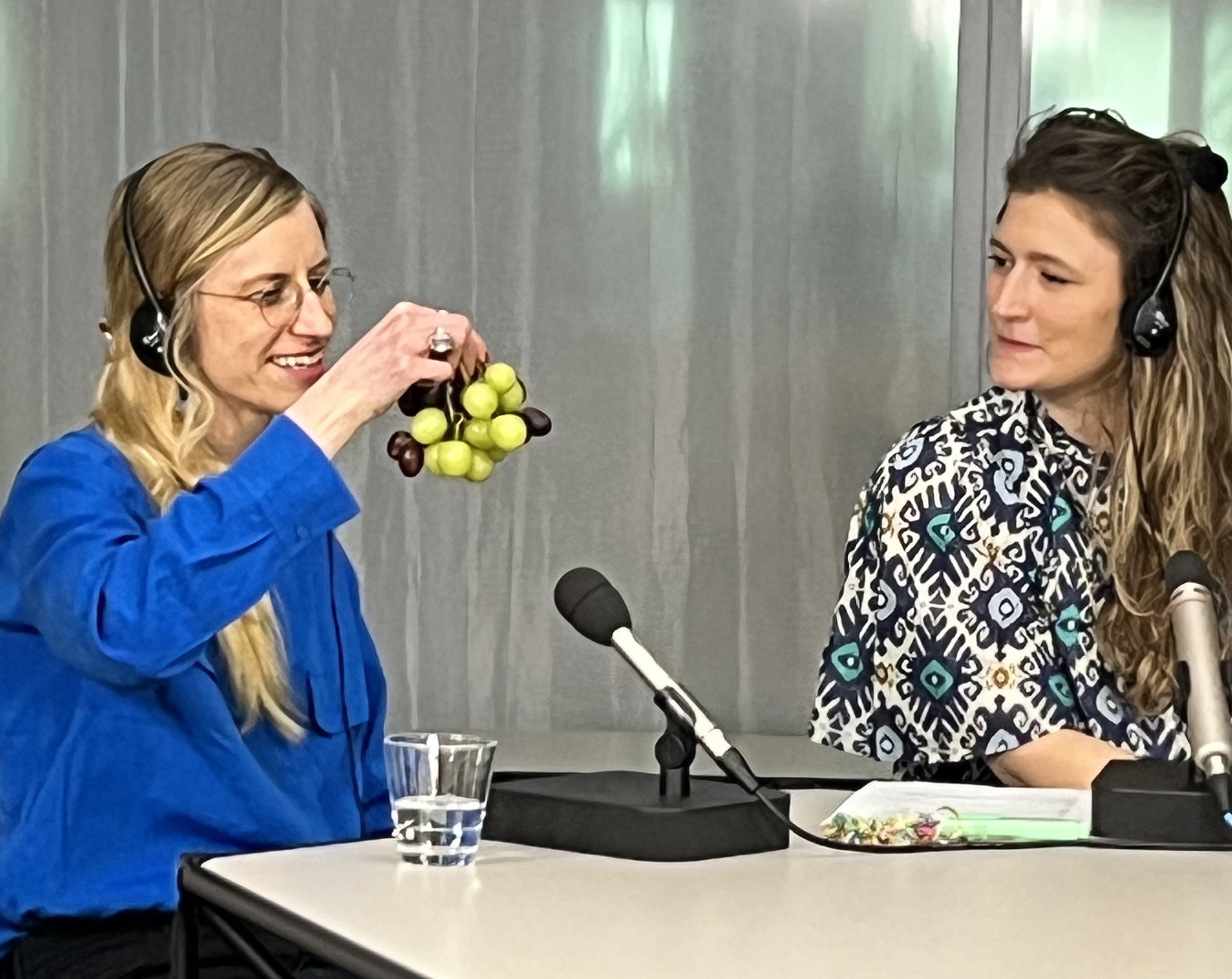
Lia Carlucci works at the intersection of innovation, industry, and policy at Food Campus Berlin, helping the people building new food solutions connect with the people who can actually bring them to market.
Lia brings grapes to introduce herself, and her metaphor is direct: many small dots connected, holding together as one.
Her work with Food Campus Berlin connects to a clear ambition: build a future where healthy and sustainable diets are accessible, not gated by price or privilege.
In practice, her episode points to a few “make it normal” levers:
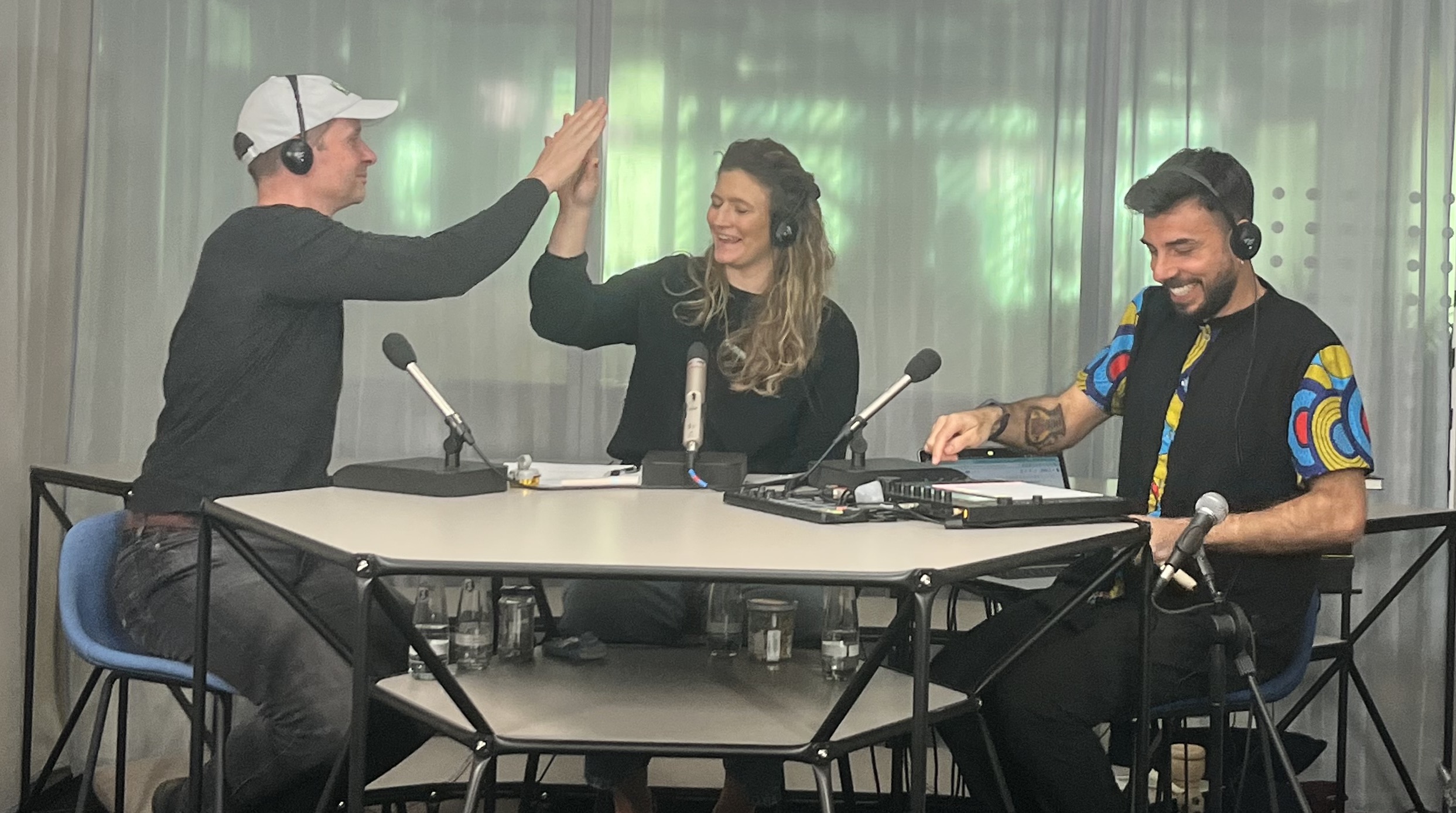
Robert Gerlach, founder of Klim, looks at food from the ground up: how farming practices, soil health, and better decision-making can make agriculture more resilient in the face of climate volatility.
Robert arrives with a giant sequoia cone, tiny seeds inside, built for longevity. He uses it as a blueprint for rebuilding food systems around resilience, connection, and long-term thinking.
His headline lands hard because it’s practical: soil health sets the ceiling for everything else.
And he frames the mindset shift in one line:
"The future of farming is about reducing risk for farmers, not adding pressure."
The goal is resilience. Practices that rebuild soil make farms less fragile when the weather swings, and they make yields less of a gamble.
From there, three very practical things matter:
We brought this topic into the room at CIC Berlin, as part of Venture Café’s Thursday Gathering #25: FoodTech & AgriTech
We brought together four voices that each sit on a different “link” of the food transition chain.
The panel speakers:
The conversation centered on what makes food innovation “real” in practice: adoption and repeatability.
Not just whether something can be invented, but whether it can be trusted, priced, distributed, and used again next week. That brought up the gritty realities founders and ecosystem players face: pilots that don’t convert into procurement, products that perform in a lab but struggle in a kitchen, distribution bottlenecks, regulatory timelines, and the constant tension between sustainability goals and price sensitivity.
Here the video recap of the event
The clearest insight from the episodes and live event was that breakthroughs don’t scale on their own: systems do.
Progress accelerates when the chain is connected: research to product, product to policy, policy to procurement, procurement to habit.
When those handoffs are designed intentionally, prototypes stop being one-off demos and start becoming normal choices on shelves, in cafeterias, and at home.
Take part in the conversation, come to the release events, suggest topics, meet the guests


